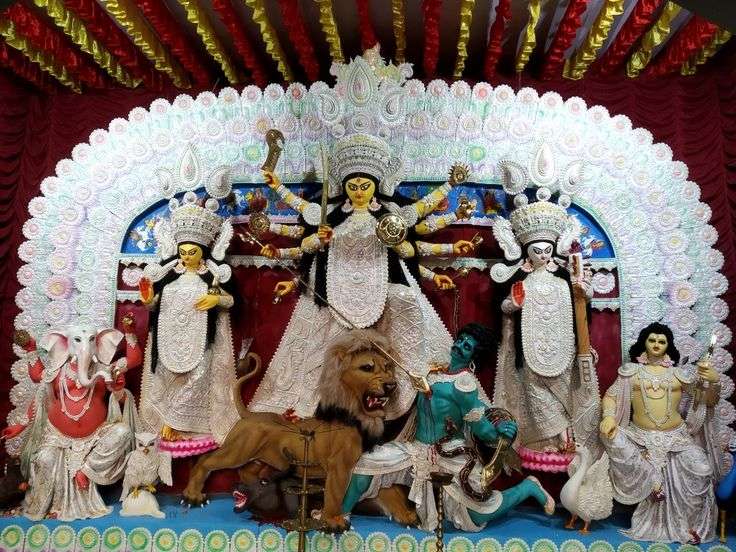
In the heart of Eastern Uttar Pradesh, Gorakhpur transforms into a divine canvas every autumn during Sharad Navratri. Unlike other regions, Gorakhpur’s celebration is a unique cultural fusion where Bengali traditions seamlessly blend with Bhojpuri devotion. For over 130 years, the city has witnessed the rhythmic beats of the Dhak echoing through its streets, signaling the arrival of Maa Durga. This festival is not just a religious observance; it is a symbol of communal harmony, historical resilience, and spiritual unity.
From the historic Bengali Samiti Pandal to the vibrant neighborhoods of Indira Nagar and Jubilee Park, Gorakhpur comes alive with thousands of devotees offering Anjali and participating in Sandhi Puja. The significance of Sharad Navratri in Gorakhpur lies in its ability to bring people together across communities, celebrating the victory of good over evil with unparalleled fervor and grace.
Cultural Highlights
- 130+ Years of Legacy: One of the oldest Durga Puja celebrations in North India.
- Cultural Fusion: A beautiful mix of Bengali rituals and Bhojpuri hospitality.
- Community Spirit: Over 1,500 pandals showcasing art, faith, and unity.
Why Sharad Navratri is Special in Gorakhpur
While Navratri is celebrated across India, Gorakhpur’s Sharad Navratri holds a distinct place due to its historical roots and cultural diversity. Here is why it is significant:
During the pre-independence era, Durga Puja in Gorakhpur served as a subtle platform for the Indian freedom struggle. Community gatherings under the guise of religious festivals allowed leaders to mobilize masses against colonial rule, turning the festival into a symbol of resistance and unity.
Gorakhpur has a significant Bengali population that settled here decades ago. Their traditional Durga Puja rituals were embraced by the local Bhojpuri community. Today, you see Bengali dhak players alongside Bhojpuri folk artists, creating a unique cultural symphony that defines the city’s identity.
With over 1,500 pandals, Gorakhpur rivals major cities in scale. Each year, committees choose new themes ranging from social awareness to mythological retellings, showcasing incredible artistic talent and craftsmanship.
A Glimpse into History
The story of Durga Puja in Gorakhpur dates back to 1896, when Dr. Yogeshwar Rai, a civil surgeon, first set up an idol at the District Hospital campus. Despite interruptions during the plague era (1903–1906), the festival was revived in 1907 at Jubilee College. In 1928, the local Bengali Samiti took over, institutionalizing the celebration and making it a grand annual event that continues to thrive today.
The sound of Dhak in Gorakhpur doesn't just mark time; it marks the heartbeat of a city waking up to its divine identity.
Key Rituals Observed in Gorakhpur
Devotees in Gorakhpur follow traditional rituals with great devotion:
- Kalash Sthapana: The invocation of divine energy on the first day.
- Anjali Pushpanjali: Offering flowers to Maa Durga with chanting of mantras, especially during Sandhi Puja.
- Dhunuchi Naach: A traditional dance with incense burners, performed by devotees in front of the idol.
- Bhog Distribution: Community meals served to devotees, promoting equality and sharing.
- Visarjan: The emotional immersion of the idol on Vijayadashami, marking the Goddess's return to her celestial abode.
Spiritual & Social Impact
Sharad Navratri in Gorakhpur is more than a festival; it is a social glue. It brings together people from different castes, communities, and backgrounds under one roof. The shared experience of worship, food, and culture fosters a sense of belonging and peace. For the youth, it is a time to connect with their roots, while for elders, it is a nostalgic journey back to tradition. The festival reinforces the values of truth, courage, and compassion in the hearts of millions.