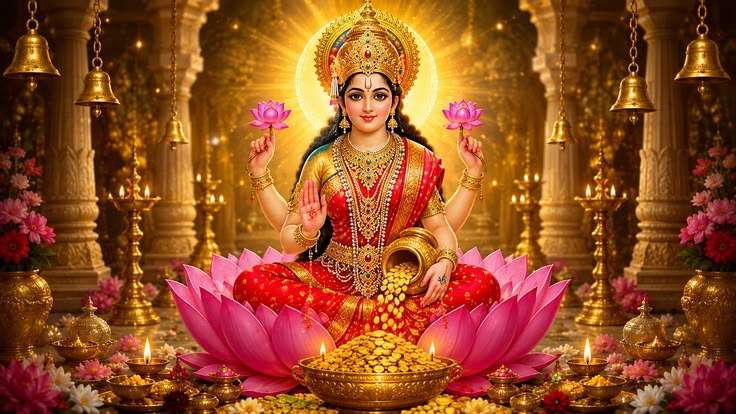
While Diwali is widely celebrated as a festival of lights, fireworks, and sweets, its core essence is deeply spiritual and philosophical. In Hinduism, Diwali symbolizes the eternal victory of light over darkness, knowledge over ignorance, and good over evil. It is not just an external celebration but an invitation to ignite the inner light (Atman) within every individual. Understanding the spiritual significance of Diwali transforms the festival from a mere social event into a profound journey of self-realization and divine connection.
For devotees in Gorakhpur and across India, Diwali is a time to reflect on their lives, cleanse their hearts of negativity, and renew their commitment to Dharma (righteousness). The lighting of the Diya (lamp) is a powerful metaphor: just as a small lamp can dispel centuries of darkness in a room, a single spark of true knowledge can remove the lifelong ignorance of the soul.
Spiritual Insights
- Inner Awakening: Diwali represents the awakening of consciousness and self-awareness.
- Unity in Diversity: Celebrated by Hindus, Jains, Sikhs, and Buddhists for different historical reasons.
- New Beginnings: Symbolizes the start of a new financial and spiritual year.
The Metaphor of Light and Darkness
In Hindu philosophy, "Darkness" (Tamas) represents ignorance, ego, anger, greed, and fear. "Light" (Sattva) represents knowledge, truth, compassion, and peace. Diwali is a reminder that no matter how deep the darkness of our problems or confusion may seem, the light of wisdom and faith can always pierce through it.
When we light a Diya outside our homes, we are also symbolically lighting the lamp of wisdom within our hearts. It is a promise to ourselves to let go of negative traits and embrace virtues that lead to inner peace.
Mythological & Historical Significance
Diwali’s spiritual roots are anchored in several key events from Hindu scriptures:
The most popular belief is that Diwali marks the return of Lord Rama, Sita, and Lakshmana to Ayodhya after 14 years of exile and the defeat of Ravana. The citizens lit earthen lamps to welcome them, symbolizing the victory of righteousness (Rama) over evil (Ravana).
It is believed that on this night, Maa Lakshmi emerged from the cosmic ocean during the Samudra Manthan. Devotees worship her to invite not just material wealth, but spiritual abundance and purity into their lives.
In Southern India, Diwali celebrates Lord Krishna’s victory over the demon Narakasura, freeing thousands of prisoners. This signifies the liberation of the soul from the bondage of ego and tyranny.
For Jains, Diwali marks the attainment of Moksha (liberation) by Lord Mahavira, the 24th Tirthankara. It is a day of prayer and reflection on his teachings of non-violence and truth.
"Thousands of candles can be lighted from a single candle, and the life of the candle will not be shortened. Happiness never decreases by being shared." – Buddha
Diwali as a Festival of Unity
One of the most beautiful aspects of Diwali is its ability to unite people across castes, communities, and even religions. In Gorakhpur, you will see people of all backgrounds exchanging sweets, visiting each other’s homes, and sharing in the joy of the festival. This spirit of unity and brotherhood is a core spiritual value of Sanatan Dharma, reminding us that we are all connected by the same divine light.
How to Celebrate Spiritually
To honor the true spiritual significance of Diwali:
- Meditate: Spend time in silence, reflecting on your inner light and goals for the coming year.
- Forgive: Let go of past grudges and forgive those who have hurt you. Cleanse your heart like you clean your home.
- Give (Daan): Share your wealth and food with the less fortunate. True prosperity is measured by how much you give, not how much you keep.
- Pray: Perform Lakshmi-Ganesh Puja with devotion, asking for wisdom and strength rather than just money.