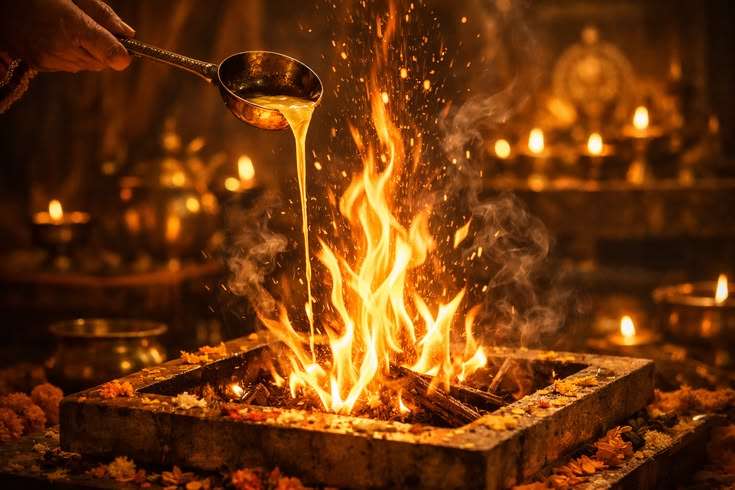
Havan Vidhi, also known as Yajna or Homam, is one of the most sacred rituals in Hinduism, involving offerings made into a consecrated fire while chanting Vedic mantras. This ancient practice serves as a bridge between the physical and spiritual realms, purifying the environment and invoking divine blessings. The significance of Havan extends beyond religious ceremonies; it represents the transformation of material offerings into spiritual energy through the medium of Agni (fire).
In this comprehensive guide, we explore the deep spiritual meaning behind the Havan ritual, the essential materials required, and the detailed step-by-step procedure to perform it correctly. Understanding the proper Havan Vidhi helps devotees connect more deeply with the divine energy and experience the transformative power of this sacred fire ceremony.
Essential Points
- Purification: Havan purifies the atmosphere and removes negative energies.
- Divine Connection: The sacred fire acts as a messenger carrying offerings to the deities.
- Universal Benefits: Regular Havan brings peace, prosperity, and spiritual growth.
Spiritual Significance of Havan
The Havan ritual holds profound meaning for practitioners:
Meaning: The smoke and fragrance from Havan samagri purify the air
and surroundings.
Significance: Scientific studies show that Havan reduces airborne
bacteria and creates a positive atmosphere. It cleanses both physical and subtle
energies in the space.
Meaning: Agni (fire) is considered the mouth of the gods, carrying
offerings to celestial beings.
Significance: Through precise mantras and offerings, specific
divine energies are invoked for blessings, protection, and fulfillment of desires.
Meaning: The rhythmic chanting and focused attention during Havan
calm the mind.
Significance: Regular practice enhances concentration, reduces
stress, and promotes inner peace. The meditative state achieved is beneficial for
spiritual progress.
Meaning: Havan helps burn away past karmas and negative
patterns.
Significance: The fire symbolizes transformation, converting
negative tendencies into positive qualities. It aids in spiritual evolution and
self-improvement.
Essential Materials for Havan
Before beginning the Havan, gather these sacred items:
- Havan Kund: A copper or clay vessel specifically designed for fire rituals, preferably square or round.
- Havan Samagri: A mixture of dried herbs, woods, resins, and aromatic substances like sandalwood, guggul, and camphor.
- Ghee: Clarified butter, preferably cow's ghee, used as the primary offering fuel.
- Sacred Wood: Pieces of mango wood, sandalwood, or other sacred woods for kindling.
- Mantra Book: Vedic scriptures or printed mantras appropriate for the specific Havan purpose.
- Achamani (Water): Clean water for purification rituals before and after the ceremony.
- Kusha Grass: Sacred grass for seating and ritual purposes.
- Flowers and Akshat: Fresh flowers and rice mixed with turmeric for offerings.
Step by Step Havan Procedure
Follow these detailed steps to perform Havan correctly:
Action: Clean the Havan area thoroughly. Take bath and wear clean
clothes. Sit facing east or north on Kusha grass.
Procedure: Perform Achamana (sip water three times). State your
Sankalp (intention) clearly, mentioning your name, gotra, date, time, and purpose of
the Havan. This sets the spiritual intention.
Action: Place small pieces of wood in the Havan Kund in a crisscross
pattern.
Procedure: Light the fire using camphor or a matchstick while
chanting "Om Agnaye Swaha." Add a small amount of ghee to establish the flame.
Ensure the fire is steady but not too intense.
Action: Invoke Lord Ganesha first to remove obstacles.
Procedure: Offer flowers, akshat, and a small amount of ghee while
chanting Ganesh mantras. Then invoke the nine planets (Navagrahas) for cosmic
harmony by offering specific items for each planet.
Action: Begin the primary mantra chanting based on the Havan's
purpose.
Procedure: Chant the chosen mantra 108 times (one mala) or 1008
times for major Havans. With each mantra completion, offer a spoonful of Havan
samagri mixed with ghee into the fire. Maintain focus and devotion throughout.
Action: Make the concluding large offering to complete the
ritual.
Procedure: Prepare a large coconut or special mixture as Purnahuti.
Chant the final mantras with heightened devotion and offer the Purnahuti into the
fire. This symbolizes the culmination of all offerings.
Action: Perform Aarti and respectfully conclude the ceremony.
Procedure: Wave a camphor Aarti before the sacred fire. Offer
prayers of gratitude. Allow the fire to extinguish naturally or immerse the
remaining ashes in flowing water. Distribute Prasad to all participants.
Havan is not merely a ritual of offering materials into fire; it is a transformative process where our ego, desires, and limitations are surrendered to the divine flame, emerging purified and enlightened.
Benefits of Performing Havan
Regular practice of Havan offers numerous benefits:
Cleanses air and removes toxins.
Reduces stress and anxiety.
Creates harmonious atmosphere.
Important Guidelines for Havan
To ensure the effectiveness of Havan Vidhi:
- Purity: Maintain physical and mental purity. Avoid non-vegetarian food and alcohol on the day of Havan.
- Timing: Early morning (Brahma Muhurta) or during auspicious muhurtas is ideal for Havan.
- Direction: Face east for knowledge-related Havans, north for prosperity, and west for removing obstacles.
- Focus: Maintain unwavering attention on the fire and mantras. Avoid distractions and conversations.
- Quantity: The number of offerings should match the number of mantra repetitions for optimal results.
- Respect: Treat the sacred fire with reverence. Never step over the Havan Kund or blow on the fire directly.