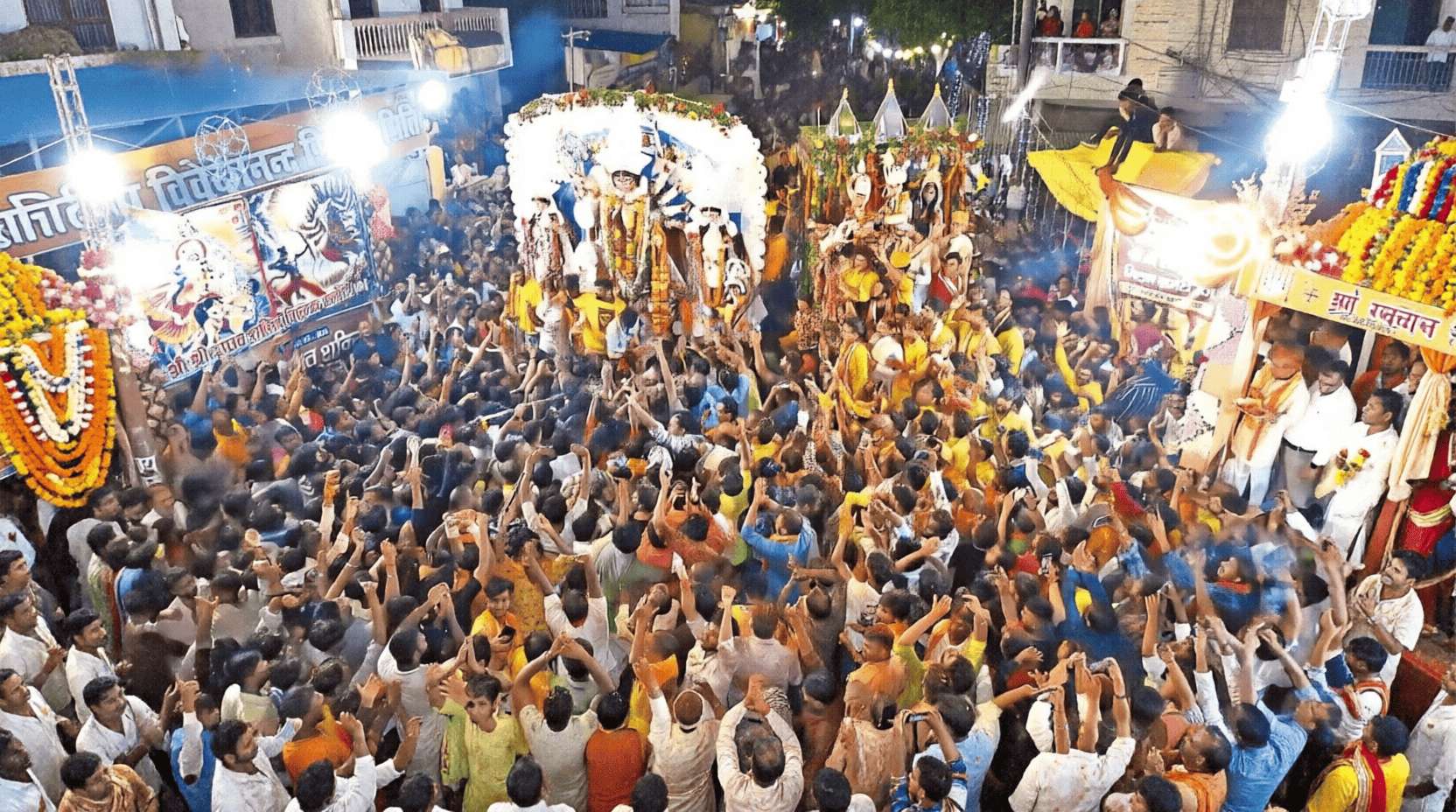
In the heart of Uttar Pradesh, Gorakhpur transforms into a divine canvas every autumn during the sacred celebration of Durga Puja in Gorakhpur. More than just a festival, it is a living testament to faith, history, and the eternal victory of good over evil. The city comes alive with vibrant decorations, traditional rituals, and devotional fervor as thousands of devotees gather to worship Maa Durga and celebrate her triumph over the demon Mahishasura.
From elaborately crafted pandals adorned with intricate artwork to the rhythmic beats of dhak drums echoing through the streets, Durga Puja Gorakhpur offers an unforgettable spiritual experience that blends ancient traditions with modern celebrations. Experience the divine energy, cultural richness, and communal harmony that make Durga Puja in Gorakhpur one of the most significant religious festivals in Eastern Uttar Pradesh.
Key Insights
- 130+ + Years: Roots tracing back to the pre-independence era.
- 1,500+ Pandals: A massive community-driven celebration.
- Cultural Fusion: A unique blend of Bengali tradition and Bhojpuri soul.
The Historical Roots & Freedom Legacy
Before independence, Durga Puja in Gorakhpur served as a subtle yet powerful platform for the Indian freedom struggle. Community gatherings under the guise of religious festivals allowed leaders to mobilize masses against colonial rule, turning the festival into a symbol of resistance and unity [[8]]. Today, that same spirit of unity thrives in over 1,500 pandals across the city, making it one of the largest celebrations in Eastern Uttar Pradesh [[23]].
The sound of Dhak in Gorakhpur doesn't just mark time; it marks the heartbeat of a city waking up to its divine identity.
A 130-Year Journey: History of the Festival
Durga Puja in Gorakhpur started in 1896 when Dr. Yogeshwar Rai, a civil surgeon, first set up an idol at the Gorakhpur District Hospital campus, marking the beginning of this historic tradition [[4]].
Celebrations were temporarily halted during these years due to a severe plague outbreak, reflecting the challenging times the city faced.
The festival was restarted at Jubilee College by Principal Aghor Nath Chattopadhyay, bringing back the spiritual fervor to the community.
In 1928, the local Bengali Samiti took over organizing the annual event, establishing a structured and community-driven celebration that continues to thrive today.
Modern Celebrations & Cultural Fusion
In contemporary Gorakhpur, Durga Puja has evolved into a magnificent blend of traditional rituals and modern artistic expression. While themes evolve annually—ranging from social awareness to mythological retellings—the core devotion remains unchanged. Families wake before dawn for Anjali Pushpanjali, offering flowers to Maa Durga amidst the rhythmic beats of the Dhak. The city’s iconic locations, including Jubilee Park, Indira Nagar, and the Bengali Tola area, transform into vibrant hubs of culture and spirituality. As immersion (Visarjan) approaches, the city wears a bittersweet smile, celebrating the victory of good over evil while promising a divine return next year.