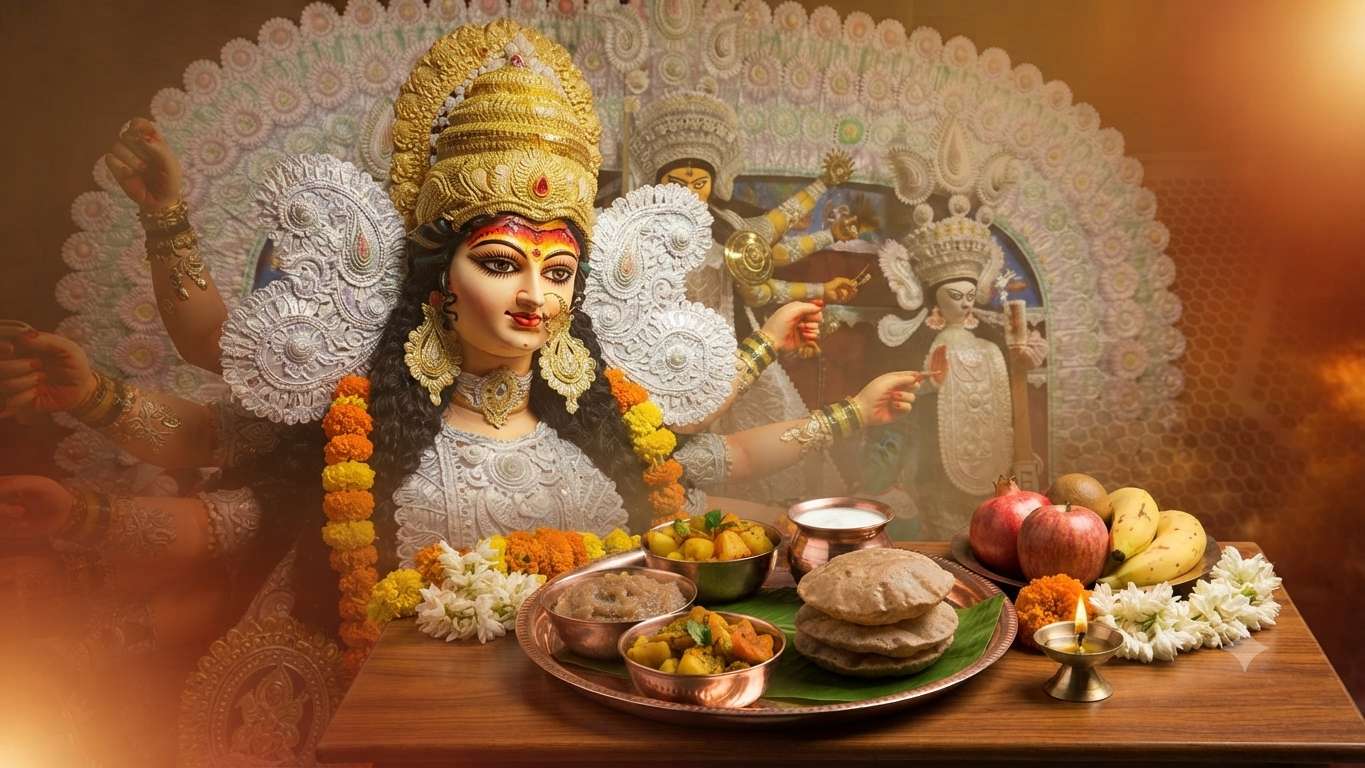
Mantras are sacred sounds that carry specific vibrational frequencies capable of transforming consciousness. During Durga Pooja, chanting the right mantras and chants is essential to invoke the presence of Maa Durga. These ancient verses, derived from the Vedas and Puranas, help focus the mind, purify the environment, and connect the devotee with the divine energy of the Goddess. Whether you are performing a simple home puja or a grand community celebration, knowing the correct Durga Mantras enhances the spiritual experience.
In this guide, we present the most powerful Durga Pooja mantras with their meanings and pronunciation tips. From the basic Beeja Mantra to the protective Navarna Mantra, these chants are tools for inner strength, protection, and spiritual growth.
Essential Points
- Vibration Matters: Correct pronunciation ensures the mantra's energy is activated.
- Intention (Sankalp): Chant with a clear mind and pure heart for best results.
- Consistency: Regular chanting (Japa) builds a strong spiritual shield.
Most Powerful Durga Mantras
Here are the key mantras used during Durga Pooja and Navratri:
Mantra: "Om Dum Durgayei Namaha"
Meaning: "I bow to Goddess Durga."
Significance: This is the simplest and most potent mantra for daily
chanting. 'Dum' is the seed sound (Beeja) of Maa Durga. Chanting it 108 times
removes obstacles and fear.
Mantra: "Om Aim Hreem Kleem Chamundayai Vichche"
Meaning: A powerful invocation of Maa Chandika (Durga).
Significance: Considered one of the most powerful tantric mantras.
It provides protection from negative energies, enemies, and diseases. 'Aim' is for
wisdom, 'Hreem' for power, and 'Kleem' for attraction/divine love.
Mantra: "Sarva Mangala Mangalye Shive Sarvartha Sadhike,
Sharanye Tryambake Devi Narayani Namostute"
Meaning: "O Auspicious One, who is the source of all
auspiciousness, O Shiva, who fulfills all purposes, O Refuge, O Three-Eyed One, O
Goddess, I bow to You."
Significance: A universal prayer for peace, prosperity, and
well-being. Often chanted at the end of Puja.
Mantra: "Ya Devi Sarvabhuteshu Shakti Rupena Samsthita,
Namastasyai Namastasyai Namastasyai Namo Namah"
Meaning: "To that Goddess who resides in all beings as Power, I bow
again and again."
Significance: From the Durga Saptashati. It reminds us that the
Divine is present in everyone and everything.
Popular Durga Chants & Stotras
Apart from single mantras, there are longer chants that are highly beneficial:
- Durga Chalisa: A 40-verse hymn describing the glory and power of Maa Durga. Reciting it daily brings courage and removes fear.
- Mahishasura Mardini Stotra: A dynamic hymn describing the battle with Mahishasura. It boosts confidence and energy.
- Argala Stotram: Chanted before reading Durga Saptashati to remove obstacles in understanding the text.
- Kilaka Stotram: Chanted to break the "lock" of ignorance and reveal the true meaning of the scriptures.
A mantra is not just a word; it is a tool for the mind. When repeated with faith, it becomes a bridge between the human and the divine.
Benefits of Chanting Durga Mantras
Regular chanting of Durga Mantras offers profound benefits:
Creates a shield against negativity.
Calms anxiety and stress.
Boosts confidence and willpower.
How to Chant Correctly
To get the maximum benefit from Durga Mantras:
- Purity: Take a bath and wear clean clothes. Sit on a wooden or woolen mat.
- Mala: Use a Rudraksha or Crystal mala for counting. One round is 108 chants.
- Pronunciation: Listen to authentic recordings to learn the correct intonation. Start slowly and gain speed over time.
- Focus: Close your eyes and visualize Maa Durga’s form while chanting.
- Time: Early morning (Brahma Muhurta) is ideal, but evening is also good.