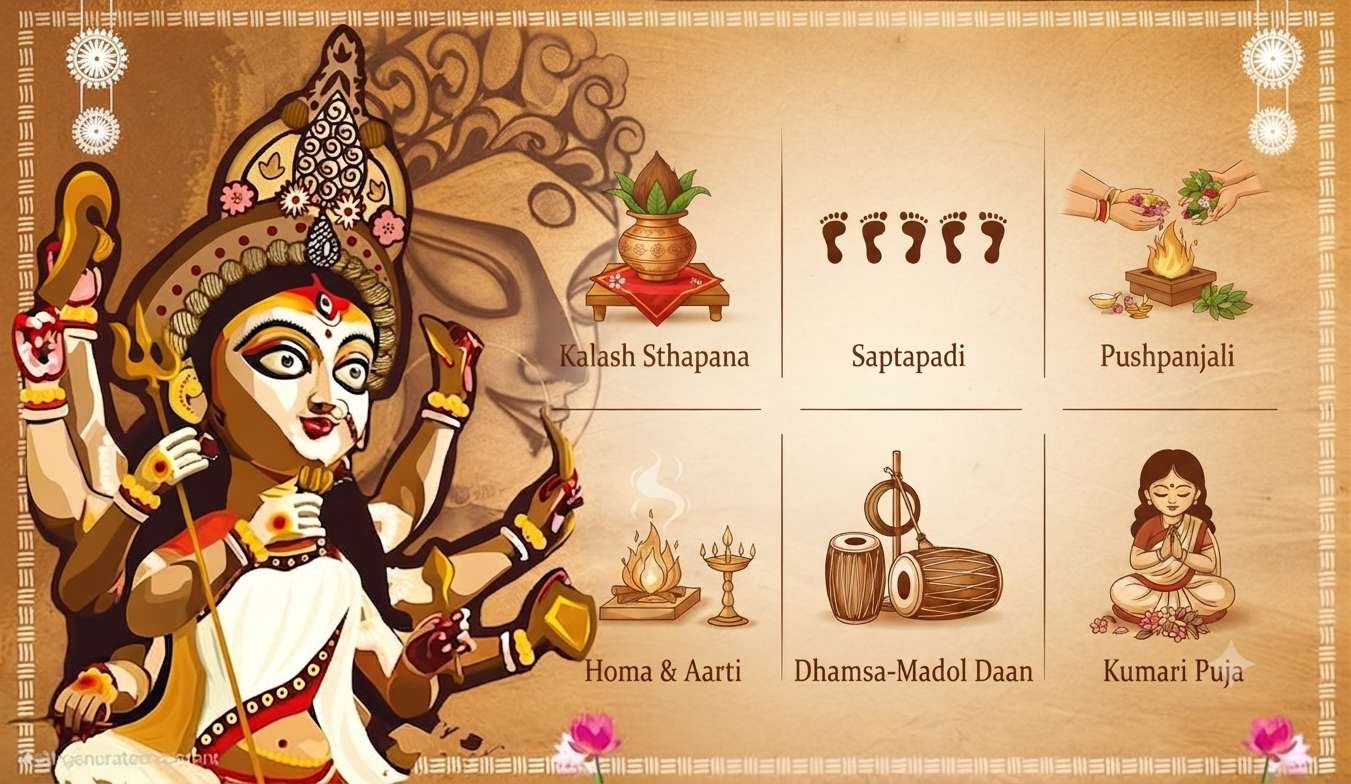
Performing Durga Pooja with proper vidhi (ritual procedure) is essential to invoke the blessings of Maa Durga, the divine mother who represents power, protection, and compassion. This comprehensive guide explains the authentic Durga Pooja vidhi step by step, following traditional Hindu scriptures and practices followed in Gorakhpur and across India. Whether you are performing Sharad Navratri Puja or Chaitra Navratri Puja, this guide will help you conduct the worship with devotion and correctness.
Durga Pooja is not just a ritual; it is a spiritual journey that connects devotees with the divine feminine energy (Shakti). By following the proper puja vidhi, chanting the right mantras, and offering items with sincerity, devotees can experience profound peace, strength, and divine grace during the sacred nine days of Navratri.
Essential Points
- Purification First: Begin with personal and space purification before starting the puja.
- Sankalp Resolution: Declare your intention clearly to Maa Durga before beginning rituals.
- Mantra Accuracy: Correct pronunciation of mantras enhances spiritual benefits significantly.
Preparation Before Durga Pooja
Proper preparation creates the right atmosphere for divine connection. Begin by taking a bath and wearing clean clothes, preferably in red, yellow, or white colors which are considered auspicious for Durga Pooja. Clean the puja area thoroughly and decorate it with flowers, rangoli, and lights. Arrange all puja samagri (ritual items) including flowers, incense, diya, akshat (rice), kumkum, betel leaves, fruits, and sweets on a clean cloth or plate. Light a ghee lamp and incense sticks to purify the environment and invoke positive energy.
The purity of heart matters more than the grandeur of arrangements. Maa Durga accepts devotion offered with sincerity.
Step-by-Step Durga Pooja Vidhi
Step 1: Ganesh Pooja (Invocation of Lord Ganesh)
Begin by worshipping Lord Ganesh to remove obstacles. Chant "Om Gam Ganapataye Namah" 108 times or offer flowers, modak, and durva grass to Ganesh idol or image. This ensures smooth completion of the main puja.
Perform Kalash Sthapana (sacred pot establishment). Fill a copper or brass kalash with water, place mango leaves on top, and position a coconut wrapped in red cloth. This kalash represents the presence of all deities and cosmic energy.
Invoke Navdurga (nine forms of Durga) by chanting their names: Shailaputri, Brahmacharini, Chandraghanta, Kushmanda, Skandamata, Katyayani, Kalaratri, Mahagauri, and Siddhidatri. Offer flowers to each form while chanting.
Perform Sankalp (solemn vow). Hold water, rice, and flower in your right palm and declare your intention to perform Durga Pooja for specific blessings or general welfare. Release the items into a vessel after completing the sankalp.
Step 2: Main Durga Pooja Rituals
Now begin the main worship of Maa Durga. Install her idol or picture on a raised platform decorated with red cloth. Apply kumkum tilak on the deity's forehead and offer fresh flowers, especially red hibiscus which is dear to Maa Durga. Light the ghee diya and incense sticks. Perform Aarti while singing Durga Aarti or playing recorded aarti. Offer naivedya (food offerings) including fruits, sweets like kheer or halwa, and cooked bhog if possible. Chant the Durga Mantra: "Om Dum Durgayei Namaha" or "Ya Devi Sarvabhuteshu Shakti Rupena Samsthita" from Durga Saptashati at least 108 times using a rudraksha or crystal mala.
Step 3: Pushpanjali and Kumari Poojan
During Pushpanjali, offer flowers while chanting specific mantras for each aspect of the goddess. If possible, perform Kumari Poojan by worshipping young girls (aged 2-10) as manifestations of Maa Durga. Wash their feet, apply tilak, offer gifts, and seek their blessings. This ritual symbolizes honoring the divine feminine in its purest form. Conclude with Pradakshina (circumambulation) around the deity three or seven times, seeking forgiveness for any mistakes during the puja.
Important Do's and Don'ts
Maintain purity and discipline throughout the nine days. Avoid non-vegetarian food, alcohol, and negative thoughts. Keep the puja area clean and lit. If you cannot perform full puja daily, at least light a diya and chant Durga mantra. Women observing fast should break it appropriately after moonrise on Ashtami or Navami. Avoid cutting hair or nails during Navratri as per traditional beliefs. Most importantly, perform the puja with shraddha (faith) and bhakti (devotion) rather than mechanical ritualism.
Spiritual Benefits of Durga Pooja
Regular performance of Durga Pooja brings numerous spiritual and material benefits. Devotees experience increased inner strength, courage, and confidence to face life's challenges. The divine mother's blessings remove obstacles, protect from negative energies, and grant peace of mind. Families performing Durga Pooja together develop stronger bonds and spiritual harmony. The practice cultivates discipline, devotion, and surrender to divine will, leading to overall well-being and spiritual growth. Many devotees report experiencing miracles and divine interventions when they worship Maa Durga with pure heart and consistent practice.