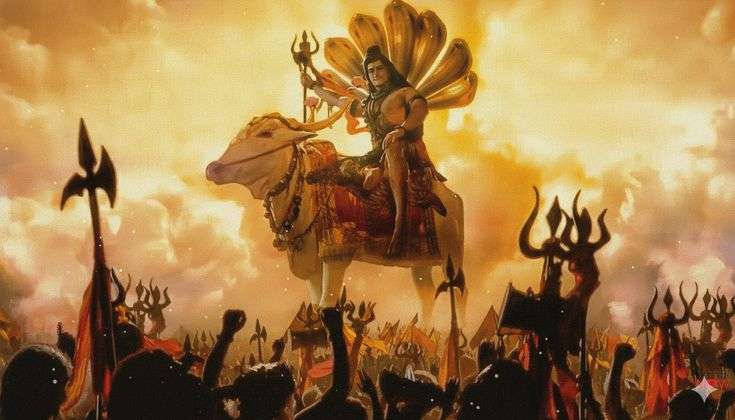
The Shiv Puran is one of the eighteen major Puranas in Hinduism, dedicated entirely to Lord Shiva, the destroyer and transformer within the Trimurti. Composed by Sage Vyasa and later expanded by various sages, this ancient text contains thousands of verses describing Shiva's divine nature, his cosmic dances, his family life with Parvati, and profound philosophical teachings on yoga, meditation, and liberation.
Beyond mythology, the Shiv Puran serves as a comprehensive guide to Shaiva philosophy. It explains the creation of the universe, the importance of sacred rituals like Rudrabhishek, the power of mantras like Om Namah Shivaya, and the path to moksha (liberation) through devotion to Shiva. The stories within are not mere entertainment—they encode deep spiritual truths about consciousness, detachment, and the nature of reality.
Essential Insights
- Beyond Destruction: Shiva's role as destroyer is actually about dissolving ego and ignorance to make way for renewal.
- Householder Yogi: Shiva demonstrates that one can be both a deep meditator and a devoted family man.
- Accessibility: Shiva is known as the easiest deity to please—sincere devotion matters more than elaborate rituals.
Famous Stories from Shiv Puran
Here are some of the most significant stories from Shiv Puran that reveal divine wisdom:
The Story: When gods and demons churned the ocean for nectar, a
deadly poison (Halahal) emerged first, threatening all existence. Lord Shiva drank
the entire poison to save the universe, holding it in his throat, which turned
blue—earning him the name Neelkanth.
Teaching: True leadership means taking on others' suffering. Shiva
shows us that spiritual strength isn't about avoiding pain but transforming it. The
poison represents negativity—we must contain and neutralize it rather than letting
it spread.
The Story: Sati, Shiva's first wife, immolated herself when her
father Daksha insulted Shiva by excluding him from a yagna. Overcome with grief,
Shiva carried her body across the universe. To stop his destruction, Vishnu cut
Sati's body into pieces, which fell at various places creating Shakti
Peeths.
Teaching: This story illustrates the pain of separation between
consciousness (Shiva) and energy (Shakti). It teaches respect for spiritual partners
and warns against ego-driven exclusion. The Shakti Peeths remind us that divine
energy permeates all locations.
The Story: Parvati created Ganesha from turmeric paste and breathed
life into him to guard her while bathing. When Shiva returned and was blocked by
Ganesha, a battle ensued. Shiva severed Ganesha's head, then replaced it with an
elephant's head upon learning the truth.
Teaching: Ganesha represents wisdom removing obstacles. The story
shows that even divine beings face misunderstandings. It teaches humility—Shiva
admitted his mistake and blessed Ganesha as the first deity to be worshipped.
Intelligence (elephant head) must guide action.
The Story: The moon god Chandra was cursed by Daksha to wane daily.
Seeking refuge, Chandra approached Shiva, who placed him on his matted hair (Jata).
This stopped the complete disappearance of the moon, allowing it to wax and wane
cyclically.
Teaching: Shiva provides shelter to those who surrender completely.
The waxing and waning moon represents the fluctuating mind—Shiva's calm
consciousness stabilizes it. Even cursed beings find grace through sincere devotion
and refuge in the divine.
The Story: Parvati performed severe penance for thousands of years
to win Shiva as her husband. She endured extreme weather, survived on air alone, and
remained unmoved by tests. Impressed by her determination, Shiva agreed to marry
her, uniting asceticism with domestic life.
Teaching: True devotion requires persistence and purity of
intention. Parvati represents focused willpower (tapasya). Their marriage symbolizes
the union of Purusha (consciousness) and Prakriti (nature), showing that
spirituality and worldly life can harmoniously coexist.
The Story: During Samudra Manthan, besides poison, many treasures
emerged including Vasuki, the king of snakes. Shiva accepted Vasuki as his ornament,
wearing him around his neck. This transformed a potentially dangerous creature into
a divine accessory.
Teaching: What we perceive as dangerous or negative can become
ornamental when handled with wisdom. Shiva doesn't reject the snake but transcends
its danger through mastery. We should transform our fears and challenges into
strengths rather than avoiding them.
The Story: Arjuna performed intense penance to obtain the powerful
Pashupatastra weapon from Shiva. Shiva tested him by appearing as a hunter and
arguing over a killed demon. When Arjuna tried to shoot the hunter, his arrows
failed. Realizing the hunter was Shiva, Arjuna surrendered and received the
weapon.
Teaching: Divine grace comes to those who persevere and remain
humble. Tests are opportunities to prove sincerity. Ego (trying to attack Shiva)
fails; surrender succeeds. True power comes from the divine, not from individual
effort alone.
The Story: Three demon brothers built invincible flying cities
(Tripura) and terrorized the universe. Only a single arrow could destroy all three
simultaneously. Shiva waited for the perfect moment when all three cities aligned,
then destroyed them with one arrow fired from his bow Pinaka.
Teaching: Timing and precision matter more than brute force.
Shiva's patience shows that waiting for the right moment yields better results than
hasty action. The three cities represent ego, desire, and anger—all must be
destroyed together for liberation.
Core Teachings of Shiv Puran
Beyond stories, the Shiv Puran offers profound philosophical guidance:
- Detachment (Vairagya): Shiva lives in cremation grounds, wears ashes, and owns nothing—teaching us to remain unattached to material possessions while fully participating in life.
- Meditation (Dhyana): Shiva is Adiyogi, the first yogi. His meditative state shows the importance of inner silence and self-realization as the highest goal.
- Compassion: Despite being powerful, Shiva is easily pleased by simple offerings like water, milk, or bel leaves. He blesses devotees regardless of their background.
- Balance: Shiva embodies contradictions—he is both ascetic and householder, fierce and gentle, still and dynamic (Nataraja). Life requires embracing all aspects.
- Transformation: As the destroyer, Shiva teaches that endings are necessary for new beginnings. Change is inevitable and should be welcomed, not feared.
"Shiva is not just a deity to worship—he is a state of consciousness to realize. When you transcend ego, desire, and fear, you touch the Shiva principle within."
Important Practices from Shiv Puran
The Shiv Puran recommends several practices for devotees:
- Rudrabhishek: Bathing Shiva linga with water, milk, honey, and other sacred substances while chanting Rudra mantras. This purifies karma and brings peace.
- Om Namah Shivaya: The five-syllable mantra (Panchakshari Mantra) is considered the most powerful for connecting with Shiva's energy. Regular japa removes obstacles.
- Monday Fasting: Observing fast on Mondays (Shiva's day) with simple sattvic food strengthens devotion and fulfills wishes.
- Maha Shivaratri: The great night of Shiva, observed with night-long vigil, fasting, and meditation, is highly auspicious for spiritual progress.
- Bilva Patra Offering: Offering bel leaves (wood apple) to Shiva is considered extremely meritorious, as the three leaflets represent Shiva's three eyes.
Sacred Shiva Sites Mentioned
The Shiv Puran glorifies several pilgrimage sites:
- Varanasi (Kashi): The city where Shiva resides permanently. Dying here grants liberation. The Kashi Vishwanath temple is one of twelve Jyotirlingas.
- Mount Kailash: Shiva's eternal abode in the Himalayas, representing the pinnacle of consciousness and spiritual achievement.
- Somnath: Where Shiva manifested as a jyotirlinga after being cursed by the moon. One of the most sacred Shiva temples in Gujarat.
- Rameshwaram: Where Rama installed a Shiva linga after defeating Ravana. Represents gratitude and completion of duty.