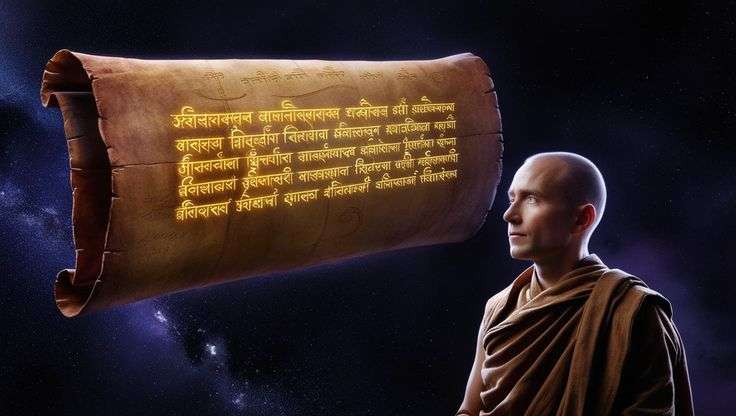
The Vedas are the oldest and most authoritative scriptures in Hinduism, composed over 3,000-5,000 years ago. The word "Veda" comes from the Sanskrit root "vid," meaning "to know." These sacred texts contain eternal knowledge about the nature of reality, the universe, human consciousness, and the path to liberation. Unlike ordinary books, the Vedas are considered Apaurusheya—not authored by humans but revealed to ancient sages (Rishis) in deep meditative states.
For beginners, the Vedas can seem overwhelming due to their vastness and complex language. However, understanding their basic structure and core teachings provides a solid foundation for exploring Hindu philosophy. The Vedas are not just religious texts—they encompass science, mathematics, medicine, music, and ethics. This guide simplifies the essential concepts to help you begin your journey into Vedic wisdom.
Essential Insights
- Oral Tradition: The Vedas were preserved through precise oral transmission for thousands of years before being written down.
- Four Collections: Rigveda, Samaveda, Yajurveda, and Atharvaveda—each serving different purposes in spiritual and practical life.
- Living Wisdom: Vedic teachings remain relevant today, influencing yoga, meditation, Ayurveda, and modern science.
What Are the Vedas?
The Vedas are a large body of religious texts originating in ancient India. They form the oldest layer of Sanskrit literature and the oldest scriptures of Hinduism. The Vedas are divided into four main collections, each with specific purposes and content.
Composed between 1500-500 BCE, making them among the world's oldest religious texts.
Written in Vedic Sanskrit, an ancient form of Sanskrit with unique grammar and pronunciation.
Preserved orally by priests through precise chanting techniques for millennia.
The Four Vedas Explained
Each of the four Vedas serves a distinct purpose in Vedic tradition:
Meaning: "Knowledge of Verses"
Content: Oldest Veda containing 1,028 hymns (Suktas) dedicated to
various deities like Agni, Indra, and Soma. Focuses on praise, philosophy, and
cosmology.
Purpose: Spiritual knowledge and understanding the nature of divine
forces. Contains the famous Gayatri Mantra and Purusha Sukta.
Meaning: "Knowledge of Chants"
Content: Mostly verses from Rigveda set to musical notes and
melodies. Contains instructions for chanting during rituals.
Purpose: Devotional singing and creating sacred vibrations through
music. Foundation of Indian classical music and ragas.
Meaning: "Knowledge of Sacrifices"
Content: Prose mantras and instructions for performing rituals,
ceremonies, and yagnas. Divided into Shukla (White) and Krishna (Black)
Yajurveda.
Purpose: Practical guide for conducting fire rituals and sacred
ceremonies correctly with proper mantras.
Meaning: "Knowledge of Atharvan Priests"
Content: Deals with daily life, healing, magic spells, medicine,
and practical problems. Contains early forms of Ayurveda.
Purpose: Addressing worldly concerns like health, prosperity,
protection, and harmonious living.
Structure of Each Veda
Each Veda is further divided into four parts:
- Samhitas: Collection of mantras and hymns—the core text of each Veda.
- Brahmanas: Prose explanations of rituals, their meanings, and how to perform them correctly.
- Aranyakas: "Forest texts" for hermits and ascetics, focusing on meditation and philosophical interpretations.
- Upanishads: Philosophical teachings exploring the nature of Brahman (ultimate reality), Atman (soul), and moksha (liberation). Also called Vedanta ("end of Vedas").
"The Vedas are not meant to be merely read—they are meant to be heard, chanted, contemplated, and lived. Their power lies in their sound vibrations and timeless truths."
Key Concepts from the Vedas
Understanding these fundamental ideas helps beginners grasp Vedic philosophy:
- Brahman: The ultimate, formless reality that pervades everything. Not a personal god but the infinite consciousness underlying all existence.
- Atman: The individual soul or true self, which is ultimately one with Brahman. Realizing this unity is the goal of spiritual practice.
- Dharma: Righteous duty, moral order, and natural law. Living according to dharma maintains harmony in society and the cosmos.
- Karma: The law of cause and effect. Every action has consequences that shape future experiences across lifetimes.
- Moksha: Liberation from the cycle of birth and death (samsara). Achieved through knowledge, devotion, or selfless action.
How to Start Studying the Vedas
For beginners interested in Vedic wisdom:
- Start with Upanishads: Begin with shorter Upanishads like Katha, Isha, or Kena rather than diving into the Samhitas directly.
- Use Translations: Read reliable English translations with commentaries by scholars like Swami Vivekananda, Eknath Easwaran, or Sri Aurobindo.
- Listen to Chanting: Experience Vedic mantras through audio recordings to understand their sonic power and rhythm.
- Join Study Groups: Learn with others who can discuss and clarify difficult concepts.
- Practice Meditation: Vedic knowledge is experiential—meditation helps internalize the teachings beyond intellectual understanding.