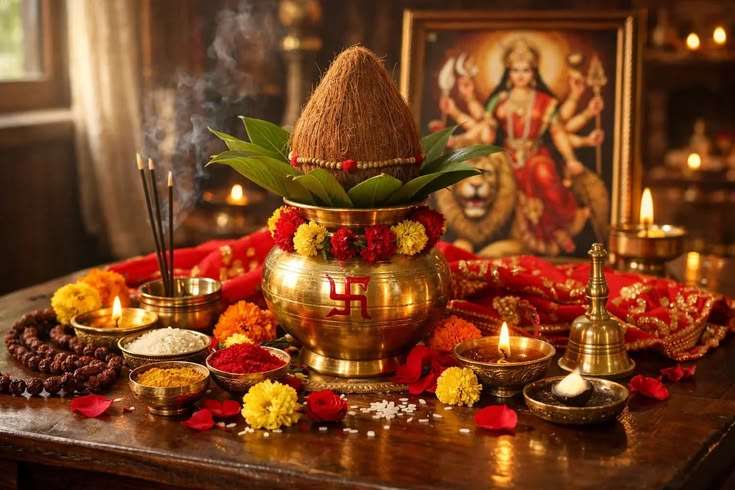
In Sanatan Dharma, consistency is key to spiritual growth. While grand festivals are important, it is the Daily Pooja (Nitya Pooja) that builds a strong foundation of discipline and divine connection. Performing Morning Pooja (Pratah Kaal) sets a positive tone for the day, while Evening Pooja (Sandhya Kaal) helps release the stress and negativity accumulated during work hours.
This guide simplifies the Vedic rituals into manageable steps for modern devotees, ensuring you can maintain your spiritual routine without feeling overwhelmed. Whether you have 15 minutes or an hour, these steps will help you connect with the Divine effectively.
Key Insights
- Purity First: Bathing and wearing clean clothes are essential before touching the idol or Yantra.
- Direction Matters: Face East or North during morning pooja; face West or North during evening pooja.
- Consistency: It is better to do a small pooja daily than a large one occasionally.
Morning Pooja Vidhi (Pratah Kaal)
The morning hours (Brahma Muhurta) are considered the most spiritually charged time. Follow this sequence:
Wake up early, take a bath, and wear clean, preferably yellow or white clothes. Sprinkle Ganga Jal in the pooja room.
Light a Ghee Diya or Camphor. This symbolizes the removal of darkness (ignorance) and the arrival of knowledge.
Take water in your right hand, make a resolve (Sankalp) for the day's well-being, and chant your family deity's mantra 108 times using a Mala.
Perform Aarti with devotion. Offer fresh flowers, fruits, or sweets as Naivedyam (Prasad). Distribute Prasad among family members.
Evening Pooja Vidhi (Sandhya Kaal)
Evening pooja is shorter but crucial for mental peace. It acts as a bridge between your professional life and personal rest.
Step 1: Cleansing the Space
Wash your hands and feet. If possible, change into comfortable home clothes. Clean the altar slightly if any flowers from the morning have dried up.
Step 2: Lighting the Lamp
Light a lamp again. In the evening, you can use mustard oil or ghee. This light protects the home from negative energies that roam during twilight.
Step 3: Short Chanting & Prayer
You don't need to do a full 108-count Jap. Chant the Maha Mrityunjaya Mantra or a simple "Om Namah Shivaya" or "Om Namo Narayana" for 5-10 minutes. Offer gratitude for the day's events.
Step 4: Night Aarti
Perform a short Aarti. Before sleeping, it is auspicious to look at the flame and then gently close your eyes, visualizing the deity's form.
Pooja is not just a ritual; it is a conversation with the Universe. Speak from your heart, and the Divine will listen.
Mental Clarity
Emotional Balance
Negative Energy Shield
Important Do's and Don'ts
- Do: Keep the Pooja room door closed when not in use to preserve energy.
- Do: Use fresh flowers and water daily. Stale offerings should be disposed of respectfully (in flowing water or under a tree).
- Don't: Perform pooja if you are physically unwell or menstruating (traditional view), but mental prayer is always allowed.
- Don't: Argue or speak harshly immediately after coming out of the Pooja room.
- Don't: Leave the lamp burning unattended if you are leaving the house.