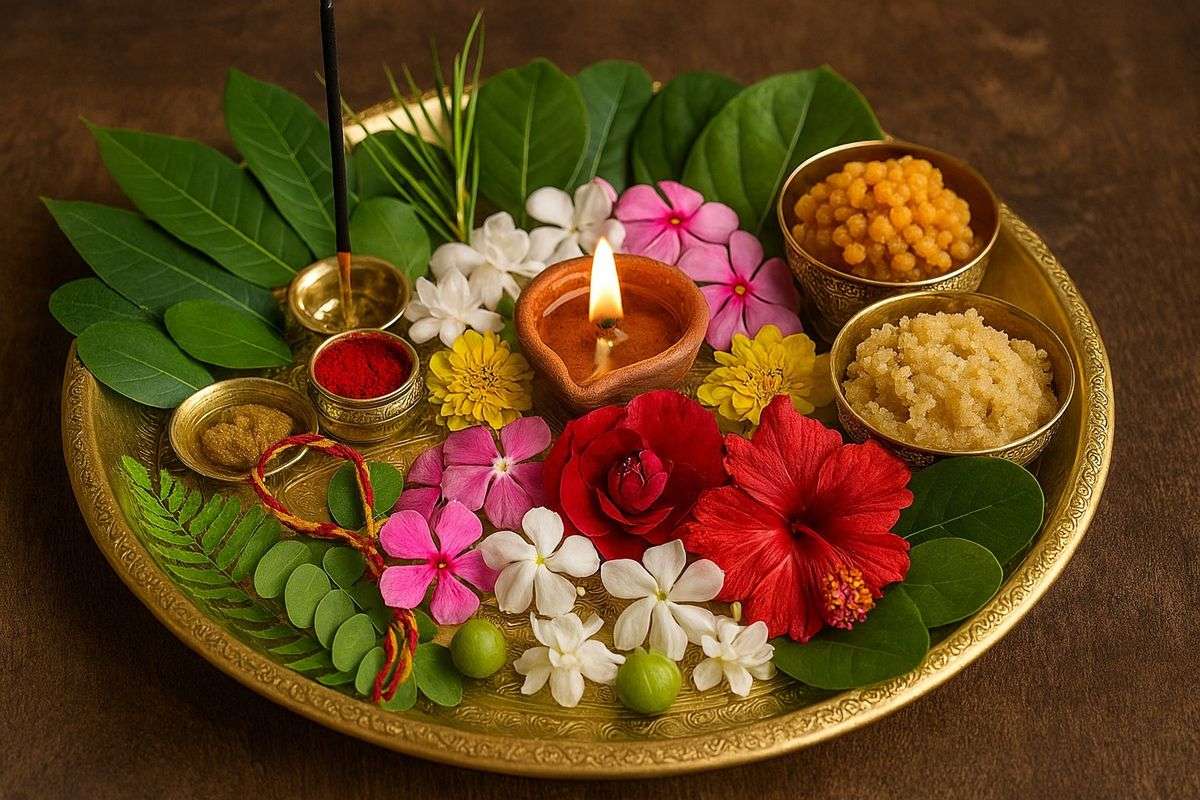
The Pooja Thali (plate) is not just a container for ritual items; it is a microcosm of the universe. Each item placed on the Thali represents a specific element of nature (Pancha Bhoota) and a spiritual quality. Understanding the significance of Pooja Thali items transforms a mechanical ritual into a mindful meditation on the divine qualities they represent.
From the cooling sandalwood to the illuminating lamp, every component serves a purpose in purifying the atmosphere and the mind of the devotee. This guide details the essential items found on a traditional Pooja Thali and their deep symbolic meanings.
Key Insights
- Deepak (Lamp): Represents the fire element and the light of knowledge dispelling ignorance.
- Kumkum & Haldi: Symbolize energy (Shakti) and purity (Shuddhi).
- Akshat (Rice): Represents prosperity and the sustenance provided by the Earth.
Essential Pooja Thali Items
A standard Pooja Thali should contain the following items, each with its own unique significance:
Significance: Represents the Fire Element (Agni). It symbolizes the removal of darkness (ignorance) and the arrival of light (knowledge). Ghee lamps are considered most sattvic.
Significance: Represents the Earth element and Energy (Shakti). Applied as Tilak, it activates the Ajna Chakra (third eye) and invokes power.
Significance: Represents purity and antiseptic properties. It is used to cleanse the aura and is often mixed with Kumkum for Tilak.
Significance: Represents prosperity and fertility. Offering rice to the deity symbolizes asking for sustenance and wealth for the family.
Significance: Represents the Air element. The fragrance purifies the surroundings and helps the mind focus during prayer.
Significance: Represent the beauty of nature and impermanence. Offering flowers signifies surrendering one's ego at the feet of the Divine.
Deeper Spiritual Meaning
Beyond the physical items, the arrangement of the Thali itself has meaning. The circular shape represents the cycle of life and the universe. Keeping the Thali clean and organized reflects the state of your mind—cluttered or clear.
- Bell: Produces sound vibrations that drive away negative energies and announce your presence to the Divine.
- Water Vessel: Represents the Water element (Jal), essential for life and purification.
- Conch (Shankh): If included, it represents the primordial sound of creation (Om).
When you offer these items with devotion, you are not just giving objects; you are offering the five elements of your being back to the Creator.
Transformation
Purification
Movement
Important Do's and Don'ts
- Do: Use a metal Thali (Brass, Copper, or Silver) as it conducts energy better than steel or plastic.
- Do: Keep the items separate and clean. Do not mix Kumkum and Haldi unless making Tilak.
- Don't: Use broken or chipped items on your Pooja Thali.
- Don't: Place the Thali on the floor. Always use a stand or a clean cloth.
- Don't: Leave leftover wax or burnt wicks in the lamp holder for the next Pooja.