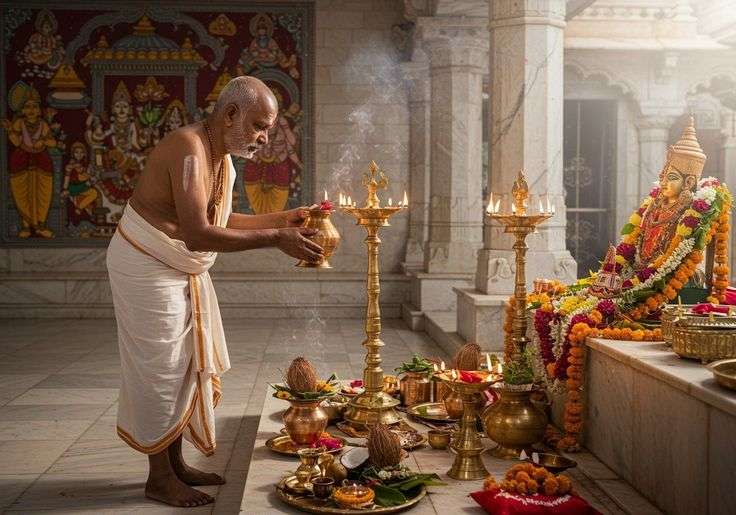
In Vedic tradition, time is not just a linear progression; it is a living energy. Performing a Pooja during an auspicious time, known as a Muhurat, amplifies the benefits of the ritual. While devotion is paramount, aligning your worship with favorable planetary positions can help remove obstacles and bring faster results. Understanding Pooja Timings is essential for anyone serious about their spiritual practice.
Whether you are planning a grand Griha Pravesh, a Wedding, or simply your daily Daily Pooja, knowing how to calculate or find the right Muhurat ensures that your efforts are supported by the cosmos. This guide simplifies the complex science of Muhurat Calculator logic for everyday devotees.
Key Insights
- Brahma Muhurta: The most powerful time for spiritual practices, occurring before sunrise.
- Rahu Kalam: An inauspicious period that should be avoided for starting new ventures or Poojas.
- Tithi & Nakshatra: Lunar days and star positions play a crucial role in determining auspiciousness.
Best Timings for Daily Pooja
For daily worship, you don't need a complex calculator. These are the universally auspicious times:
Considered the "Hour of God." The atmosphere is saturated with positive energy, making it ideal for meditation and Jap.
The transition from night to day is a powerful time for offering Arghya (water) to the Sun God and starting the day.
Another junction point of the day. Lighting a lamp at sunset helps ward off negative energies that become active at twilight.
Understanding Muhurat Calculators
For special events like Weddings, House Warming, or Business Launches, you need a specific Muhurat. Here is what a calculator considers:
- Panchang: The Vedic Almanac which lists Tithi (Lunar Day), Vara (Weekday), Nakshatra (Star), Yoga, and Karana.
- Choghadiya: A system of dividing the day and night into 8 parts. Shubh, Labh, and Amrit Choghadiyas are good for Pooja.
- Rahu Kalam: A 90-minute period every day that is considered inauspicious. It changes based on the day of the week.
- Gulikai & Yamaganda: Other inauspicious periods to avoid.
Time is the seed of all actions. Sowing the seed of Pooja in fertile time yields a harvest of blessings.
Live Muhurat Calculator
Enter details to get accurate Panchang & Auspicious timings.
Lunar Phase
Star Position
Weekday Lord
Important Do's and Don'ts
- Do: Check the Panchang for Ekadashi, Pradosham, or Purnima as these are naturally auspicious for Pooja.
- Do: Avoid Rahu Kalam for starting new rituals or installing new idols.
- Don't: Worry too much if you miss the exact minute. Devotion and purity are more important than perfect timing for daily Pooja.
- Don't: Perform Pooja during Solar or Lunar Eclipses unless specifically prescribed for that event.