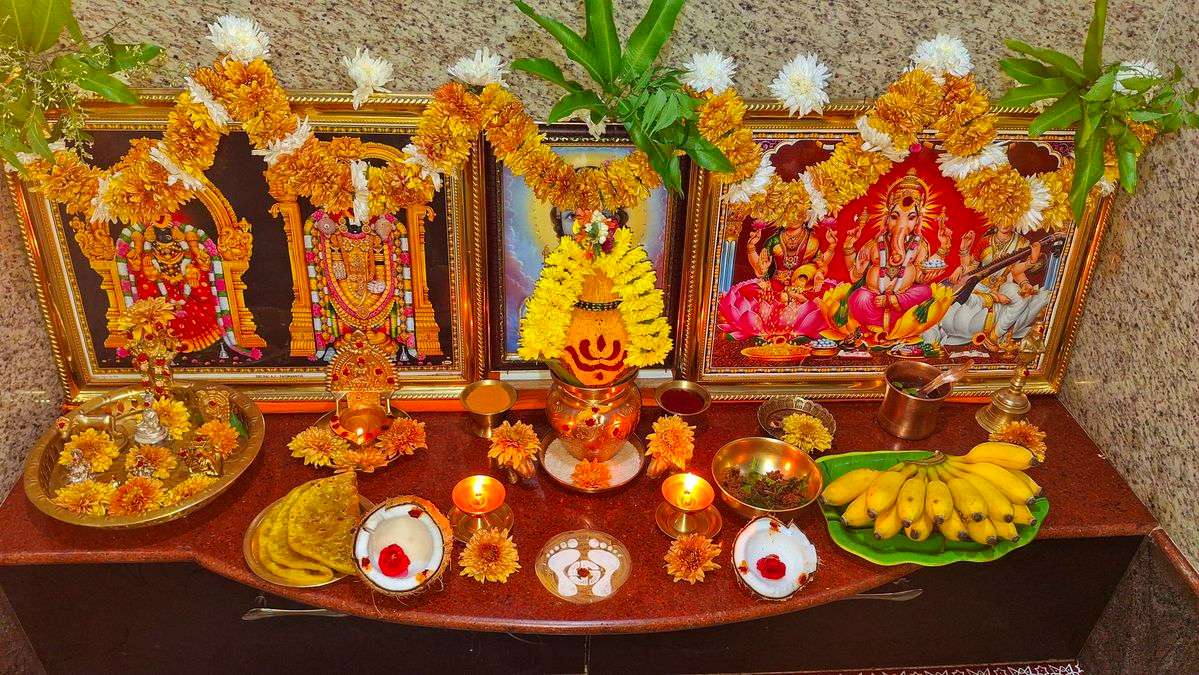
Performing a Pooja is not just about rituals; it is a sensory experience that engages sight, smell, touch, and taste to connect with the Divine. Each item used in the Pooja, known as Pooja Samagri, holds deep scientific and spiritual significance. From the cooling effect of sandalwood to the purifying properties of camphor, every element serves a specific purpose.
Whether you are setting up a new home temple or preparing for a special festival, having the right Pooja Samagri is crucial. This comprehensive list breaks down the essential items, their symbolic meanings, and how to use them correctly in your daily worship.
Key Insights
- Panchamrit: A mixture of five nectars used for Abhishekam (bathing the deity).
- Akshat (Rice): Symbolizes prosperity and is used for offering to the deity.
- Kumkum & Haldi: Represents energy (Shakti) and purity respectively.
The Essential Pooja Samagri List
Here is the categorized list of items required for a standard Hindu Pooja:
Purpose: Represents knowledge and dispels ignorance.
Material: Ghee or Oil Diya, Camphor.
Purpose: Purifies the air and creates a divine atmosphere. The scent helps in focusing the mind.
Purpose: Offering beauty and freshness. Specific leaves like Tulsi (for Vishnu) and Bilva (for Shiva) are highly auspicious.
Purpose: Sharing your meal with the Divine. Includes fruits, sweets, milk, and water.
Purpose: Used for Tilak. Kumkum (vermilion) represents power, Haldi (turmeric) represents purity, and Akshat (rice) represents wealth.
Advanced/Special Occasion Items
For festivals like Diwali, Navratri, or Griha Pravesh, you may need these additional items:
- Panchamrit: A mix of Milk, Curd, Ghee, Honey, and Sugar/Jaggery.
- Ganga Jal: Holy water for purification.
- Roli-Chawal: For applying Tilak on family members after Aarti.
- Durva Grass: Specifically for Lord Ganesha.
- Coconut: Symbolizes the ego, which is broken to reveal the pure soul inside.
The quality of your devotion matters more than the quantity of your samagri. However, using pure and clean items shows respect to the Divine.
Natural Ingredients
Fire Element (Agni)
Water Element (Jal)
Important Do's and Don'ts
- Do: Store your Pooja Samagri in a clean, dry box dedicated only for worship items.
- Do: Check expiry dates on items like Ghee, Oil, and Incense sticks.
- Don't: Use broken or chipped vessels for offering food or water.
- Don't: Mix leftover offerings from one deity to another unless specified in tradition.
- Don't: Keep the Pooja Thali on the floor. Always use a stand or a clean cloth.