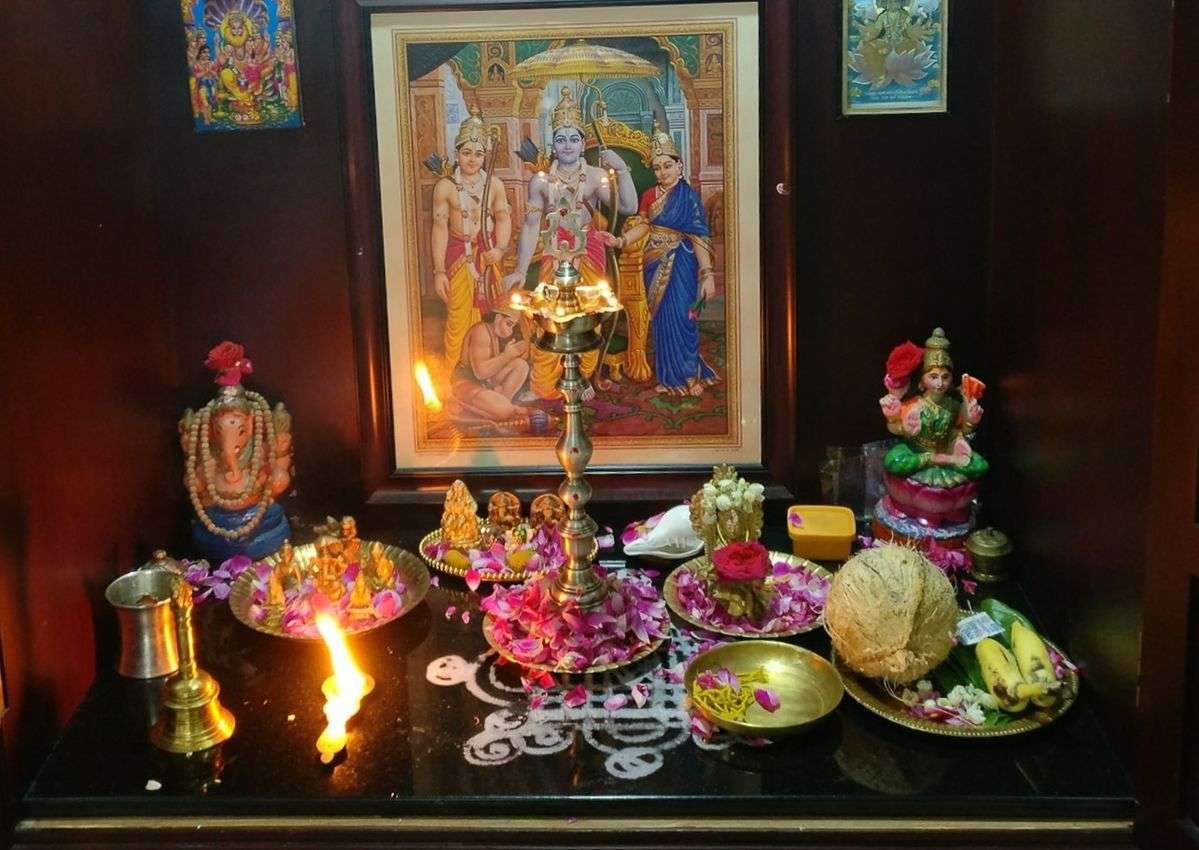
A Home Mandir (Prayer Room) is not just a corner of the house; it is the spiritual heart of your home. According to Vastu Shastra, the energy flow in this space directly impacts the peace, prosperity, and health of the family. Setting up a Mandir requires careful consideration of direction, placement, and purity.
Whether you have a dedicated room or a small shelf in your living area, creating a sacred space helps in grounding your daily meditation and Pooja routines. This guide provides step-by-step instructions on how to set up your Home Mandir correctly, ensuring it becomes a source of positive energy.
Key Insights
- Best Direction: The North-East (Ishanya) corner is considered the most auspicious for a Mandir.
- Elevation: Idols and Yantras should never be placed directly on the floor; use a wooden stand or shelf.
- Clutter-Free: Avoid keeping shoes, dustbins, or electronic items near the prayer space.
Vastu Directions for Home Mandir
The direction in which you place your Mandir and the direction you face while praying are crucial for maximizing positive energy.
This is the "God's Corner." It is the best location for a Mandir as it receives the first rays of the sun and is associated with spiritual growth.
If North-East is not available, the East wall is the second-best option. Facing East while praying brings clarity and focus.
Never place your Mandir in the South-West corner, as this zone is associated with heaviness and stability, not spiritual lightness.
While praying, you should ideally face East or North. Avoid facing South while offering prayers.
Step-by-Step Setup Guide
Step 1: Choose the Right Spot
Select a quiet, clean corner. If possible, dedicate a separate room. If not, use a high shelf in the living room. Ensure the wall behind the idols is solid and not a bathroom or kitchen wall.
Step 2: Install the Altar (Chowki)
Use a wooden platform or a marble slab. The height should be such that the idols are at or slightly above your eye level when you sit. Cover the platform with a red or yellow cloth.
Step 3: Placement of Idols
Place the main deity in the center. Lord Ganesha should often be placed first or on the left. Ensure idols are not broken or chipped. Keep the spacing between idols minimal but respectful.
Step 4: Essential Accessories
Arrange your Pooja Samagri neatly. Keep a bell, a lamp stand, and an incense holder within easy reach. You can also place a small image of your Guru or spiritual master.
A Mandir is a battery of positive energy. Keep it clean, lit, and filled with devotion to keep the energy flowing.
Natural Ventilation
Fresh Energy Flow
Bell & Mantra
Important Do's and Don'ts
- Do: Keep a Kalash (pot) with water and mango leaves in the Mandir for continuous positivity.
- Do: Use natural materials like wood, marble, or brass for the Mandir structure.
- Don't: Place the Mandir under a staircase or in a bedroom (unless necessary for health reasons).
- Don't: Keep photos of deceased ancestors in the same line as deities; they should be placed separately or lower.
- Don't: Allow pets or children to play roughly near the sacred space.