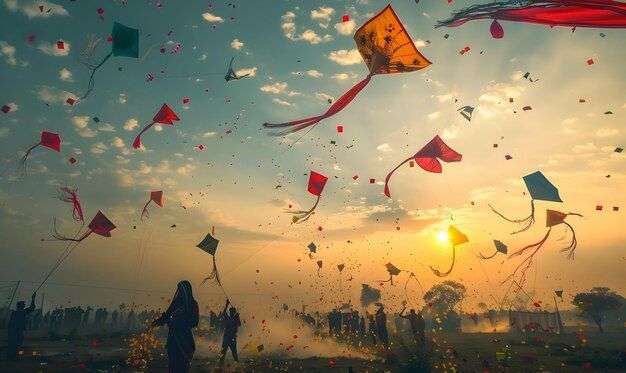
Makar Sankranti is one of the few Hindu festivals based on the solar cycle rather than the lunar calendar. It marks the transition of the Sun into the zodiac sign of Capricorn (Makar Rashi) and the beginning of Uttarayan—the six-month period when the Sun moves northward. This astronomical event usually falls on January 14th or 15th every year, signaling the end of winter and the start of longer, warmer days.
Across India, this day is celebrated under various names: Pongal in Tamil Nadu, Lohri in Punjab, Bihu in Assam, and Uttarayan in Gujarat. Despite regional differences in name and custom, the core essence remains the same: gratitude to the Sun God (Surya) for a bountiful harvest, charity to the needy, and the celebration of new beginnings. It is considered an extremely auspicious day for spiritual practices and charitable acts.
Essential Insights
- Solar Event: Unlike most Hindu festivals, the date is fixed on the Gregorian calendar due to its solar basis.
- Harvest Joy: It is primarily a thanksgiving festival for farmers celebrating the winter crop harvest.
- Spiritual Shift: The northward movement of the Sun is believed to enhance spiritual energy and positivity.
Spiritual and Cultural Significance
Makar Sankranti holds deep meaning in Hindu tradition:
Concept: Uttarayan begins
Explanation: From this day, days become longer and nights shorter.
Symbolically, it represents the victory of knowledge (light) over ignorance
(darkness) and the awakening of nature from its winter slumber.
Concept: Harvest Thanksgiving
Explanation: Farmers offer the first grains of the harvest to the
deities. It is a time to acknowledge the interdependence between humans, cattle, and
the earth. Cattle are bathed, decorated, and worshipped for their role in
agriculture.
Concept: New Ventures
Explanation: Since the Sun enters a new phase, it is considered
highly auspicious for starting new projects, buying property, or performing
housewarming ceremonies. The energy of the day supports growth and stability.
Common Rituals and Traditions
While customs vary by region, these are the most widespread rituals of Makar Sankranti:
- Holy Dip (Snan): Taking a bath in holy rivers like the Ganga, Yamuna, or Godavari early in the morning is believed to wash away sins and bring merit. In Prayagraj, this marks the start of the Kumbh Mela.
- Surya Puja: Offering water, flowers, and Arghya to the rising Sun. Chanting the Gayatri Mantra or Surya Stotra is common.
- Kite Flying: Especially popular in Gujarat and Rajasthan, flying kites symbolizes reaching out to the divine and enjoying the fresh winter breeze.
- Bonfires (Lohri): In North India, people gather around bonfires, throwing popcorn and sweets into the fire as an offering to Agni (Fire God) for warmth and prosperity.
- Charity (Dana): Donating khichdi (rice-lentil mix), jaggery, sesame seeds, and warm clothes to the poor is considered highly meritorious on this day.
Festival Foods
Food plays a central role in the celebrations:
Exchanging sweets made of sesame and jaggery with the phrase "Til gul ghya, god god bola" (Take sweetness, speak sweetness).
A nutritious dish of rice, lentils, and vegetables cooked in earthen pots, distributed to communities.
In South India, freshly harvested rice is boiled with milk and jaggery to make Pongal, offered to the Sun God.
"Just as the Sun changes its course to bring light and warmth, let us change our hearts to bring kindness and warmth to others."
Regional Names and Celebrations
How different parts of India celebrate:
- Punjab (Lohri):** Night before Sankranti. Bonfires, dancing Bhangra, and celebrating the birth of sons or newlyweds.
- Tamil Nadu (Pongal):** Four-day festival. Decorating cows, drawing Kolams (rangoli), and cooking Pongal.
- Assam (Magh Bihu):** Community feasts, traditional games, and building makeshift huts (Bhelaghar).
- Gujarat (Uttarayan):** International Kite Festival, colorful skies, and undhiyu (mixed vegetable curry).