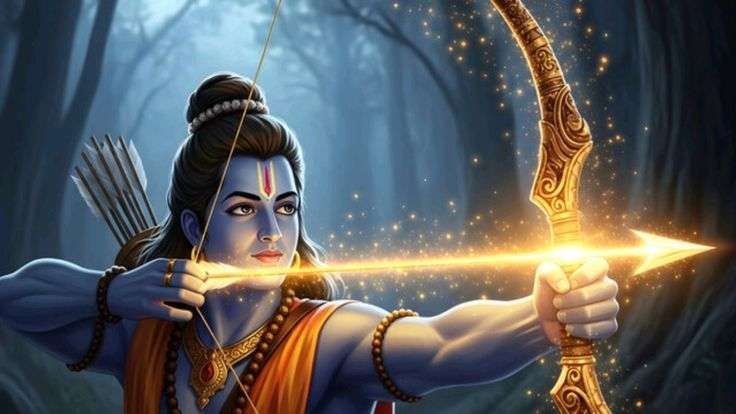
Rama Navami is a major Hindu festival celebrating the birth of Lord Rama, the seventh avatar of Vishnu and the protagonist of the epic Ramayana. Observed on the ninth day (Navami) of the bright fortnight (Shukla Paksha) in the month of Chaitra (March-April), it marks the beginning of spring and the victory of righteousness. Lord Rama is revered as Maryada Purushottam—the ideal man who upheld dharma even in the face of immense personal sacrifice.
The festival is not just a birthday celebration but a commemoration of the values embodied by Rama: truth, duty, compassion, and courage. The story of his life, as told in the Ramayana by Sage Valmiki, serves as a moral compass for millions. From his exile to the defeat of Ravana, every episode teaches profound lessons about human conduct, loyalty, and the ultimate triumph of good over evil.
Essential Insights
- Ideal Role Model: Rama represents the perfect son, husband, brother, and king.
- Epic Narrative: The Ramayana is not just history; it is a guide to ethical living and spiritual growth.
- Pan-Indian Celebration: Celebrated with temple rituals, processions, and recitations across India and Nepal.
The Ramayana Story in Brief
The epic tale of Lord Rama’s life can be summarized in these key events:
Event: Arrival of Vishnu
Story: Born to King Dasharatha and Queen Kaushalya in Ayodhya, Rama
was the eldest of four brothers: Lakshmana, Bharata, and Shatrughna. His birth
brought joy to the kingdom and fulfilled the gods' request for an avatar to destroy
evil.
Event: Sacrifice for Truth
Story: To honor his father’s word, Rama accepted 14 years of exile,
accompanied by Sita and Lakshmana. In the forest, the demon king Ravana abducted
Sita, taking her to Lanka. This set the stage for the great battle between good and
evil.
Event: Power of Devotion
Story: Rama met Hanuman, the devoted monkey god, who helped him
find Sita. With the help of the Vanara (monkey) army and Vibhishana (Ravana’s
righteous brother), Rama built a bridge to Lanka.
Event: Triumph of Dharma
Story: Rama defeated Ravana in a fierce battle, rescuing Sita.
After completing his exile, he returned to Ayodhya, where he was crowned king. His
reign, known as Rama Rajya, became synonymous with peace, justice, and prosperity.
How Rama Navami is Celebrated
Devotees observe the day with devotion and joy:
- Fasting and Prayer: Many devotees fast from sunrise to sunset, breaking it after evening prayers. Temples are decorated with flowers and lights.
- Recitation of Ramayana: Reading or listening to the Ramayana, especially the Bal Kand (childhood) and Ayodhya Kand, is common. Some complete the entire epic over nine days.
- Kalyanotsavam: In South Indian temples, a ceremonial wedding of Rama and Sita is performed with great grandeur, symbolizing their divine union.
- Processions: Idols of Rama, Sita, Lakshmana, and Hanuman are taken out in colorful processions through the streets.
- Charity: Donating food, clothes, and money to the poor is considered highly meritorious on this day.
Key Characters and Their Values
The Ramayana teaches through its characters:
Represents Duty and Righteousness. Always puts others before himself.
Represents Strength and Purity. Stands firm in her values despite adversity.
Represents Devotion and Service. The ideal disciple who serves selflessly.
"Rama is not just a king of the past; he is the conscience of the present. His life reminds us that truth may be difficult, but it is always victorious."
Famous Rama Temples
Pilgrims visit these sacred sites during Rama Navami:
- Rameshwaram: Where Rama worshipped Shiva before crossing to Lanka.
- Ayodhya: The birthplace of Rama, now home to the grand Ram Mandir.
- Bhadrachalam: Famous for the Sitarama Kalyanam ceremony in Telangana.
- Nasik (Panchvati): Where Sita was abducted by Ravana.